

Exploitation has been observed for CVE-2026-35616, a critical improper access control zero-day vulnerability affecting Fortinet FortiClientEMS devices.
Key takeaways:
- CVE-2026-35616, an improper access control vulnerability, has been exploited in the wild as a zero-day.
Public exploit code has been identified and Fortinet products have a long history of targeting by malicious actors.
Hotfixes have been released by Fortinet and should be applied as soon as possible to protect from this threat.
Background
On April 4, Fortinet published a security advisory (FG-IR-26-099) for CVE-2026-35616, a critical improper access control vulnerability affecting Fortinet FortiClientEMS.
| CVE | Description | CVSSv3 |
|---|---|---|
| CVE-2026-35616 | Fortinet FortiClientEMS Improper Access Control Vulnerability | 9.1 |
Analysis
CVE-2026-35616 is a critical improper access control vulnerability affecting Fortinet FortiClientEMS. A remote, unauthenticated attacker can exploit this flaw to execute arbitrary code using specially crafted requests which bypass API authentication. While no attribution has been provided as of the time this blog was published, the advisory from Fortinet confirms that exploitation has been observed. The advisory credits Simo Kohonen from Defused and Nguyen Duc Anh, who reported the vulnerability to Fortinet. On April 4, Defused released a Linkedin post confirming their observations of zero-day exploitation of this flaw. At the time this blog was published, Tenable Research has classified this flaw as a Vulnerability of Interest according to our Vulnerability Watch classification system. Historical Exploitation of Fortinet Devices Fortinet vulnerabilities have historically been common targets for cyber attackers, with 24 Fortinet CVEs currently on the Cybersecurity and Infrastructure Security Agency’s (CISA) Known Exploited Vulnerabilities (KEV) list, with 13 of those being linked to ransomware campaigns. Targeting of Fortinet flaws have been attributed to a number of threat actors, including Salt Typhoon. Just over a week ago, Defused reported exploitation in the wild for CVE-2026-21643, SQL injection vulnerability affecting FortiClientEMS. Fortinet’s advisory now reflects that exploitation has been observed but as of April 6, the flaw has not yet been added to the KEV.
🚨 Fortinet Forticlient EMS CVE-2026-21643 – currently marked as not exploited on CISA and other Known Exploited Vulnerabilities (KEV) lists – has seen first exploitation already 4 days ago according to our data Attackers can smuggle SQL statements through the “Site”-header”¦ pic.twitter.com/pHwl2qMVsj, Defused (@DefusedCyber) March 28, 2026 At the time this blog was published on April 6, CVE-2026-35616 had not been added to the KEV, however we anticipate that it is likely to be added in the near future. As Fortinet devices have been popular targets for attackers, the Tenable Research Special Operations Team (RSO) has authored several blogs about vulnerabilities affecting these devices. The following table outlines some of the most impactful Fortinet vulnerabilities in recent years.
CVE Description Published Tenable Blog CVE-2025-64155 Fortinet FortiSIEM Command Injection Vulnerability January 2026 CVE-2025-64155: Exploit Code Released for Critical Fortinet FortiSIEM Command Injection Vulnerability CVE-2025-64446 Fortinet FortiWeb Path Traversal Vulnerability November 2025 CVE-2025-64446: Fortinet FortiWeb Zero-Day Path Traversal Vulnerability Exploited in the Wild CVE-2025-25256 Fortinet FortiSIEM Command Injection Vulnerability August 2025 CVE-2025-25256: Proof of Concept Released for Critical Fortinet FortiSIEM Command Injection Vulnerability CVE-2025-32756 Fortinet FortiVoice, FortiMail, FortiNDR, FortiRecorder and FortiCamera Arbitrary Code Execution Vulnerability May 2025 CVE-2025-32756: Zero-Day Vulnerability in Multiple Fortinet Products Exploited in the Wild CVE-2024-55591 Fortinet Authentication Bypass in FortiOS and FortiProxy January 2025 CVE-2024-55591: Fortinet Authentication Bypass Zero-Day Vulnerability Exploited in the Wild CVE-2024-21762 Fortinet FortiOS Out-of-bound Write Vulnerability in sslvpnd February 2024 CVE-2024-21762: Critical Fortinet FortiOS Out-of-Bound Write SSL VPN Vulnerability CVE-2023-27997 FortiOS and FortiProxy Heap-Based Buffer Overflow Vulnerability June 2023 CVE-2023-27997: Heap-Based Buffer Overflow in Fortinet FortiOS and FortiProxy SSL-VPN (XORtigate) CVE-2022-42475 FortiOS and FortiProxy Heap-Based Buffer Overflow Vulnerability December 2022 CVE-2022-42475: Fortinet Patches Zero Day in FortiOS SSL VPNsAA23-250A: Multiple Nation-State Threat Actors Exploit CVE-2022-47966 and CVE-2022-42475 CVE-2022-40684 FortiOS and FortiProxy Authentication Bypass Vulnerability October 2022 CVE-2022-40684: Critical Authentication Bypass in FortiOS and FortiProxy Proof of concept
As of April 6, a public proof-of-concept has been identified on GitHub, however Tenable Research has not yet verified the exploit. Given the past exploitation of Fortinet devices and published exploit code for several past vulnerabilities, we anticipate that exploitation will continue to increase as additional exploits are released.
Solution
The following table details the affected and fixed versions of Fortinet FortiClientEMS devices for CVE-2026-35616:
Product Version Affected Range Fixed Version FortiClientEMS 7.2 Not affected N/A FortiClientEMS 7.4 7.4.5 through 7.4.6 7.4.7 or above As of April 6, Fortinet has provided a hotfix for FortiClient EMS 7.4.5 and 7.4.6 to address this vulnerability. Version 7.4.7 has not yet been released, but will be an upcoming release that addresses this vulnerability. Until that release, the hotfix must be applied to be protected against this vulnerability. We recommend reviewing the security advisory as Fortinet may make future updates to the document.
Identifying affected systems
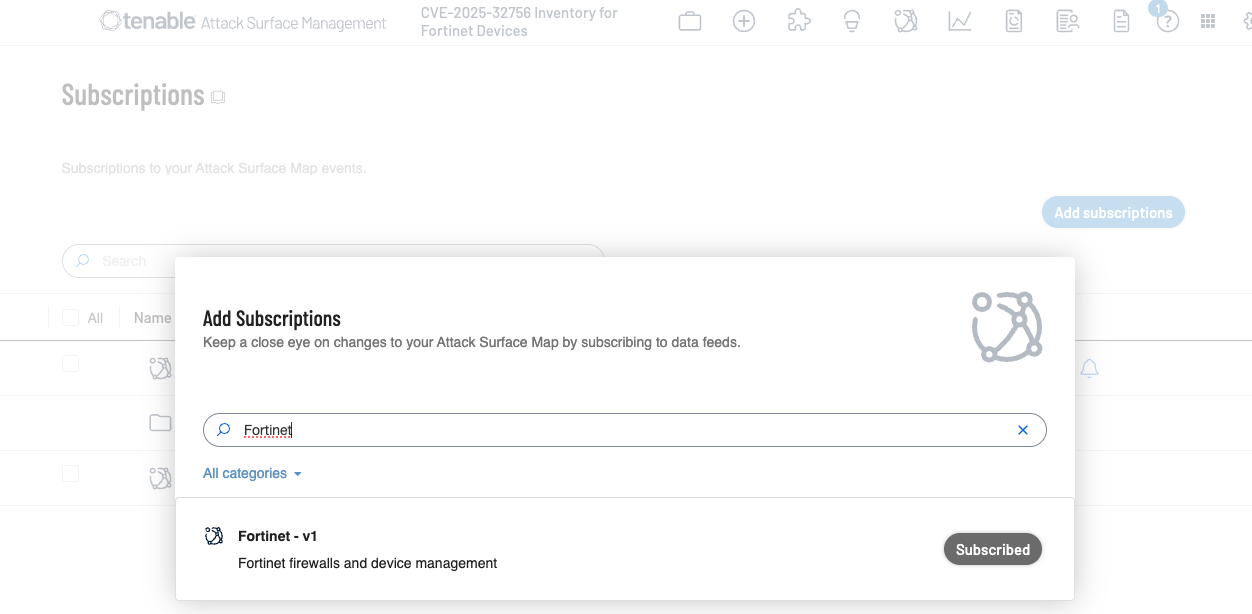
A list of Tenable plugins for this vulnerability can be found on the individual CVE page for CVE-2026-35616 as they’re released. This link will display all available plugins for this vulnerability, including upcoming plugins in our Plugins Pipeline. Additionally, customers can utilize Tenable Attack Surface Management to identify public facing assets running Fortinet devices by using the following subscription:
Get more information
Fortinet FG-IR-26-099 Security Advisory Join Tenable’s Research Special Operations (RSO) Team on the Tenable Community. Learn more about Tenable One, the Exposure Management Platform for the modern attack surface.

First seen on securityboulevard.com
Jump to article: securityboulevard.com/2026/04/cve-2026-35616-fortinet-forticlientems-improper-access-control-vulnerability-exploited-in-the-wild/


